
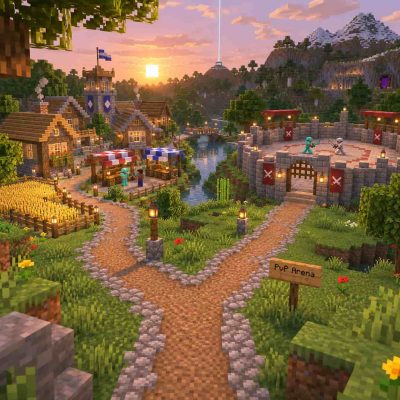
 A Minecraft survival multiplayer server, or SMP, gives you a shared world to explore, build in, and return to. Rules vary across SMP servers. One community might protect your base so you can spend months building a town. Another might encourage raids or start everyone over each season. Before joining, think about what you’d like to do on a typical evening, then check whether the server’s rules support that playstyle.
Compare Vanilla, Semi-Vanilla, and Modded SMPs
Vanilla is a good fit if you enjoy the familiar survival loop of gathering materials, building shelter, and exploring. Look for a server that describes how closely it follows the base game. You may still find an allowlist or staff who investigate theft. If you want farms or redstone builds to behave the way they do in your single-player world, ask whether the server changes those mechanics.
Semi-vanilla usually keeps familiar survival gameplay and adds conveniences or protections. You might get a command that teleports you home, tools to claim land, or a way to keep items in a grave when you die. The label covers a wide range of servers, so read the feature list. If you enjoy building roads between towns, for example, a community that mainly gets around by teleporting may feel quiet between settlements.
Modded suits players who want additions such as machinery, magic, new biomes, or quests. Read the modpack description to see what you’ll actually spend time doing. If the server requires a client modpack, confirm the Minecraft version, mod loader, and exact pack release in its joining guide. If friends are coming along, check that everyone can run the pack.
Check Where PvP Is Allowed
Find the server’s rules page or read the welcome and rules channels in its community space. Look for player versus player combat, usually shortened to PvP. Check whether combat is disabled, requires consent, takes place in designated areas, or is allowed everywhere. A server can welcome duels in an arena and still ban surprise attacks while you’re mining.
Read any rules on traps, raiding, and taking items from defeated players. If you want to compete, check whether opponents can attack your base while you’re offline. If you want to build in peace, look for a rule that says unwanted attacks are prohibited and check how to report one.
Find Out What Land Claims Protect
A land claim marks an area as yours or your group’s. Check what that claim protects. Can visitors open chests, use doors, or damage builds with explosions? Can you give friends access to storage without letting them change the whole base? These details matter when you share a workshop or invite players to visit a public farm.
Look up starting claim limits and what happens if you take a break. A small starter claim might cover a cabin and garden, while a town could require more space or several players pooling their claims. If the SMP relies on a no-griefing rule instead of automatic protection, ask whether staff can restore damaged builds and how players submit reports.
See How Players Trade
Check whether players barter directly, exchange diamonds at shops, or use a server currency and auction system. A shopping district can give you a reason to specialize in farming or gathering materials. A group that prefers to share resources may be happier on a server where players can pool supplies and progress at their own pace.
If running a shop sounds fun, find out where you can open one, whether you need to rent a plot, and how customers pay. Check any restrictions on automated farms or bulk sales if your plans depend on producing large quantities of one item.
Ask What Resets and When
Look for a season schedule or the latest reset announcement. A full reset typically starts a new world, while a resource world reset may refresh mining areas and leave the main building world intact. Ask which dimensions are affected and what happens to inventories, claims, and money. If the policy says “no planned resets,” check whether that applies to the world where you’ll build.
Pick a long-running world if your goal is to finish a project over several months. If you like racing friends to early milestones, find out when the next season starts. Old announcements can also show how much notice players usually get.
Make Your Shortlist Before You Join
Write down your must-haves in one sentence. For a shared town, that might mean semi-vanilla survival, consent-only PvP, claims that friends can edit, and a persistent building world. Compare two or three servers against that list. If a rule is unclear, ask staff a specific question, such as whether claims expire after a month away.
Check the edition and supported game version before you apply. If the server uses an allowlist, confirm how to request access and whether each friend needs to submit a separate application first. Once you’ve confirmed the rules that matter to you, join for a short session and see whether players use the world the way you’d like to.